

 Integrity and Good Governance
Artificial Intelligence for NPOs

Instructor
Maria Cabrera Perez
Reviews
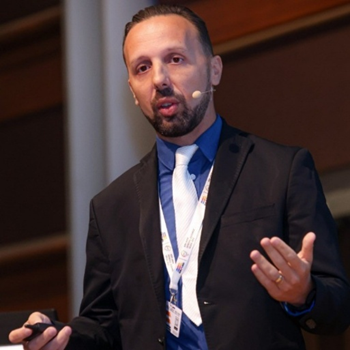
Instructor
leonardocunha
Reviews
Course Overview
I would begin the training session by defining the concept of artificial intelligence in general terms, before going on to explain it in a way that is more specifically tailored to non-profit organisations. Artificial intelligence (hereinafter AI) consists of computer systems capable of performing tasks that normally require human intelligence.
For non-profits, AI could be extremely beneficial, as it enables them to carry out repetitive tasks, manage large volumes of data, improve communication between donors and project beneficiaries, and reduce operational costs. Furthermore, it can be a valuable ally in carrying out administrative tasks, such as drafting emails. Similarly, it can assist with the preparation of publications (for example, social media posts), the development of management tools (strategy, monitoring, human resources, marketing, etc.), managing volunteers, carrying out translation work, and preparing project proposals and terms of reference for consultancy work, amongst other things. In this respect, it is a particularly useful tool for people in vulnerable situations, such as those with hearing or visual impairments, as it can automatically generate subtitles or convert text to speech.
As we can see, therefore, there are numerous benefits. We are talking about operational efficiency, as the time previously spent on manual tasks would be reduced, training would become much more accessible, and services, in general, could be tailored to specific needs.
However, this tool not only offers us strengths and opportunities, but also entails various threats and vulnerabilities. Data may be biased, which underlines the importance of critical thinking when interpreting it. It can also lead to a loss of creativity and the capacity for development, as people become accustomed to having work done for them. As a result, we may find ourselves caught up in a technological dependency that is not beneficial. Similarly, it is essential to adopt a cautious approach when it comes to data protection and privacy.
For this reason, it is essential to allocate resources and train the public so that they know how to work with artificial intelligence without engaging in unethical practices. In this regard, it is equally important to continuously assess the impact of AI on processes, so that they can be adjusted whenever necessary. We must ensure that AI does not replace human beings, as critical thinking is essential for developing social initiatives that genuinely contribute to the well-being of the population.
I also believe it would be useful to include, in the training sessions, examples of non-profits or organisations of recognised standing that already incorporate artificial intelligence into their day-to-day operations, in order to illustrate its practical application. In this context, UNICEF uses AI to map data on child poverty in real time; Amnesty International uses it to analyse human rights violations in different countries; and Rainforest Connection employs this technology to detect the sounds of chainsaws in forests, thereby helping to combat deforestation.
General objectives of the course:
- To understand the fundamental concepts of artificial intelligence.
- To explore the ethical, social and legal challenges associated with AI.
- To develop a critical perspective on the use and implementation of AI systems.
- To find out about non-profit organisations that use AI to manage their projects.
Estimated course completion time:
2 hours.
Guest expert:

Rui Levy
This course is supported by the Cape Verdean Olympic Committee and its Olympic Academy through Olympic Solidarity within the Community365 program.




What You'll Learn?
- • To understand the concept and basic workings of Artificial Intelligence.
- • Identify practical applications of AI in the social sector and within NGOs.
- • Learn how to use AI tools to automate tasks and optimise processes.
- • To improve communication with donors, beneficiaries and volunteers.
- • To promote the ethical and responsible use of emerging technologies.
- • To develop critical thinking about the limitations and risks of AI.
- • Managers and directors of NGOs and non-profit organisations.
- • Social and community project coordinators.
- • People involved in fundraising and the management of social programmes.
- • People interested in learning about AI.
- • An interest in technology and innovation applied to the social sector.
- • No prior knowledge of artificial intelligence is required.
- • A willingness to learn about ethics and best practice in the use of AI.
- • Computer or device with internet access.
- • Online course platform.
- • Digital content and explanatory videos.
- • Interactive quizzes.
- • Tutorials and examples of AI tools.
- • Reading resources and support materials.
Course Content
- An explanation of the concept of artificial intelligence, with a focus on non-profits.
- Benefits that artificial intelligence can bring to non-profits.
- Risks associated with the use of artificial intelligence.
- Non-profits that have implemented artificial intelligence. Case study: using AI in our non-profit organisation.

